Combustion Research Consortium Confirms Fire Is Hot, Describes Temperature As 'A Meaningful Variable In Whether Something Is Currently On Fire'
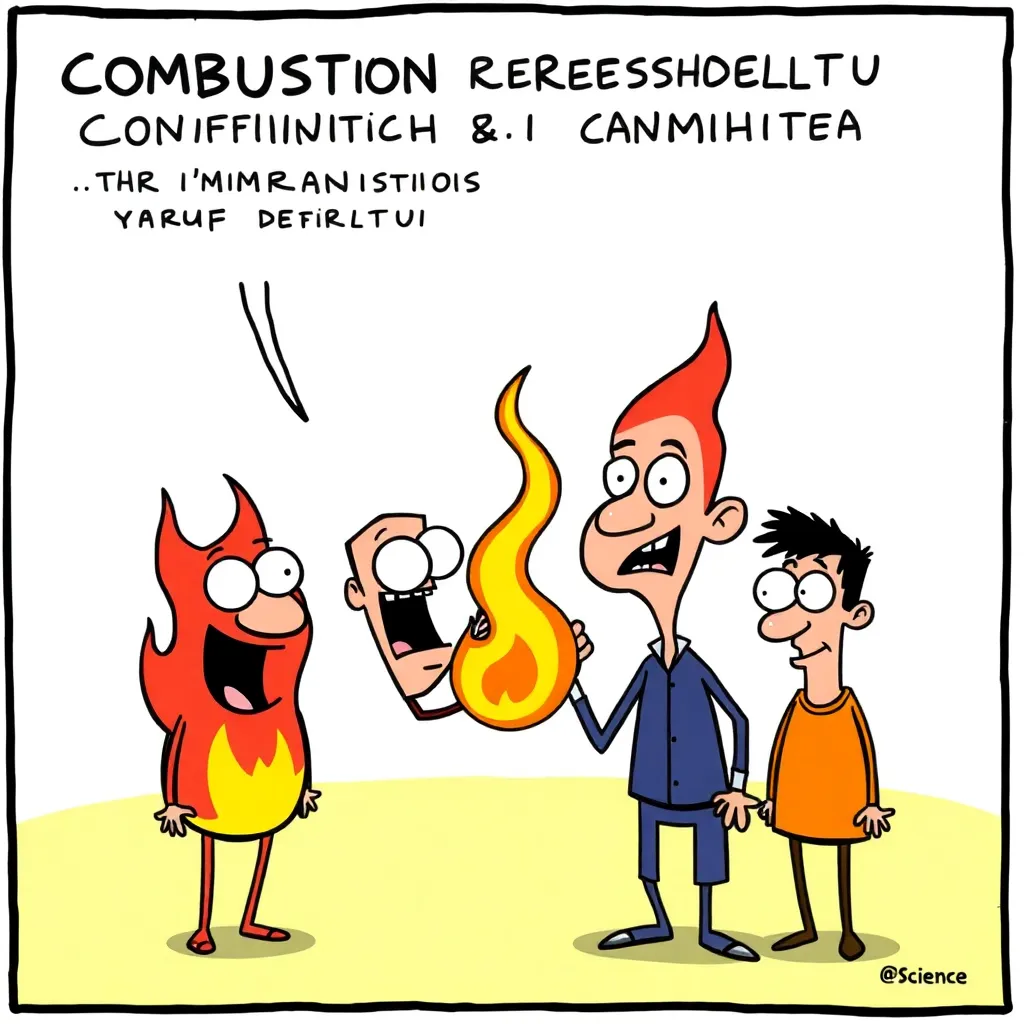
WASHINGTON, D.C. — After more than four years of federally funded research, the Combustion Research Consortium released its landmark findings Tuesday, confirming that fire is hot and that this hotness appears to be directly related to fire's well-documented ability to burn things.
The 340-page report, titled 'Thermal Properties of Sustained Ignition Events: Toward a Framework for Understanding Why Fire Burns,' was presented at a morning press conference by lead investigator Dr. Pauline Fethwick of the Institute for Things That Are Warm Or Warmer. Dr. Fethwick described the findings as 'significant, though she acknowledged the panel stopped short of calling them surprising.
'What we can say with confidence is that fire produces heat,' Dr. Fethwick told reporters. 'Whether that heat is the heat we were looking for is a separate question, and frankly one for a follow-up grant cycle.'
The research, which consumed $4.2 million in federal funding and involved controlled exposure of various materials to open flames, determined that objects placed directly into fire became hot in a majority of observed cases. The report notes that in eleven instances, objects became 'very hot,' a subcategory the panel described as 'a promising area for further inquiry.'
Co-investigator Dr. Thom Brassler, who oversees the Consortium's Division of Temperatures That Are Higher Than Other Temperatures, said the team initially hypothesized that fire might be warm rather than hot, and described the eventual conclusion as 'a recalibration moment for the field.'
'We came in with assumptions,' Dr. Brassler admitted. 'Science requires you to be willing to discover that those assumptions were, in this case, slightly less correct than fire being hot, which it is.'
The report has received measured praise from the broader scientific community. Dr. Renata Gloos of the University of Applied Obvious Sciences called the methodology 'thorough if occupationally brave,' noting that three research assistants sustained what the report clinically describes as 'thermally consistent contact injuries' during data collection.
Not all reactions have been positive. Senator Dale Purtch of the Senate Subcommittee on Research That Should Have Taken Less Time questioned whether four years was an appropriate timeline for the project. Dr. Fethwick defended the duration, explaining that the first two years were spent establishing a shared definition of 'fire,' and that the third year was largely consumed by a parallel investigation into whether the fire used in testing was 'representative fire.'
'We wanted to be rigorous,' she said. 'You cannot simply point at a fire and say that's fire and move on. That is not peer-reviewed science. That is a Tuesday.'
The Consortium's report includes fourteen policy recommendations, the first of which advises relevant federal agencies to 'acknowledge fire's thermal properties in applicable safety documentation.' Recommendation seven suggests that citizens who are on fire 'consider addressing the situation in a timely manner,' though the panel noted enforcement mechanisms fall outside their jurisdiction.
A spokesperson for the National Institutes of Health confirmed that a follow-up study examining whether fire that has gone out is still hot has been approved for funding, with an estimated completion date of 2029.