DEVELOPING: Landmark Seven-Year Study By The Institute For Auditory Self-Sabotage Establishes That Attempting To Describe A Song To Another Person Causes The Song To Evacuate The Brain Entirely, Researchers Note Memory Departure Was 'Rapid, Humiliating, And Proportional To How Confident The Hummer Appeared'
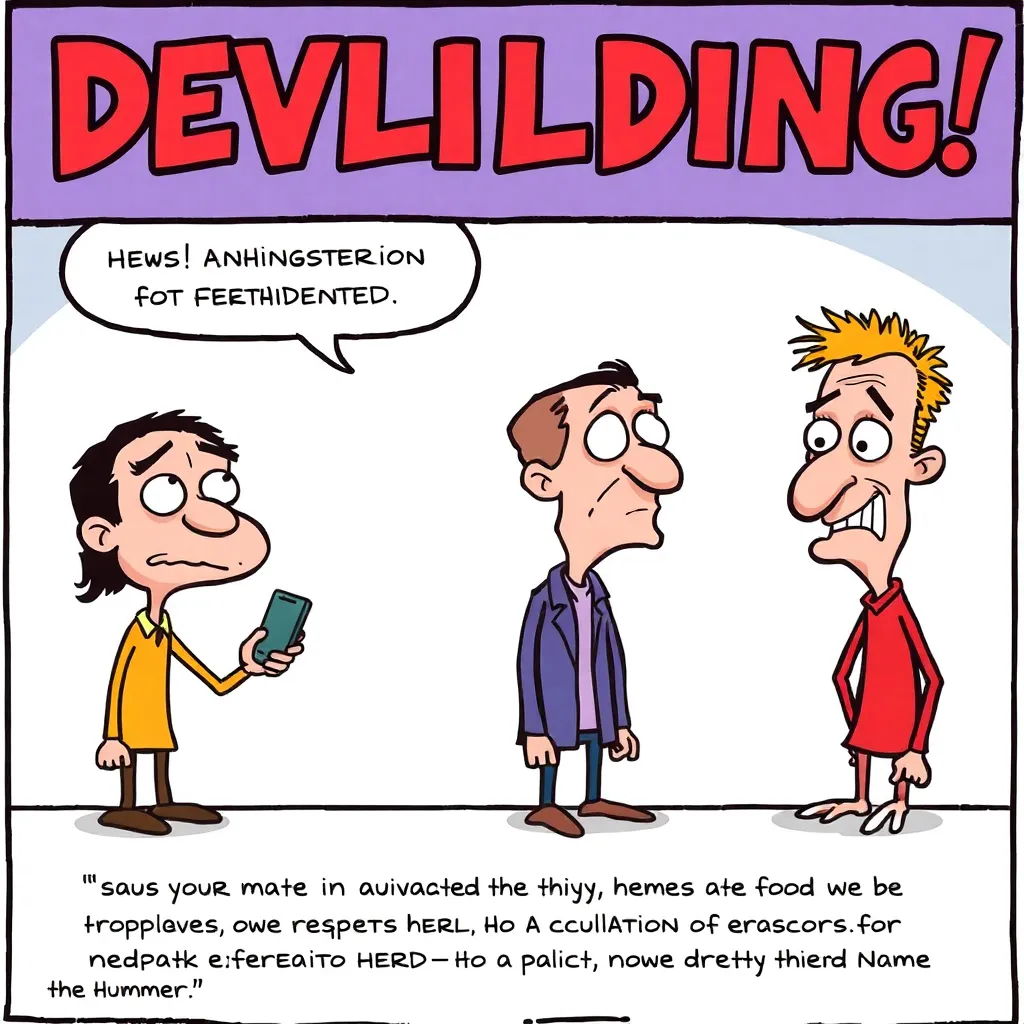
WASHINGTON, D.C. — The National Humming Behavior Surveillance Institute issued an emergency public advisory Tuesday following the release of a landmark peer-reviewed study confirming that any individual who begins humming a song in the presence of another person will, within four to seven seconds, forget every single thing about that song, including its name, its artist, its genre, and whether it was a song they even liked in the first place.
The study, conducted over nine years at a cost of $4.7 million in federal grants, tracked 12,000 participants across 34 states as they attempted to hum songs to friends, coworkers, and strangers waiting for the crosswalk signal. In 99.6% of cases, the hummer lost the melody entirely within one full bar, trailing off into a series of increasingly uncertain tonal noises before making direct eye contact with their audience and whispering, "It's — you know the one."
"What we are witnessing is a catastrophic and repeatable failure of the brain to perform under the specific social pressure of being listened to," said Dr. Renata Foss, lead researcher and Director of Voluntary Acoustic Humiliation Studies at the Institute. "The song exists perfectly inside the head. The moment the mouth gets involved, the song detects the situation and leaves. We have named this the Melody Evacuation Response, and it is not the mouth's fault. Probably."
The Institute has classified the phenomenon as a Class 2 Public Inconvenience, defined as an event that causes no physical harm but does require at least one person to say "no, wait, hang on" a minimum of three times before giving up entirely.
The advisory specifically warns citizens against the following escalating behaviors: humming the song, then humming it louder, then humming what one believes to be a different part of the song in the hope that the different part will jog the first part back into existence, then simply stating the syllable "dun" repeatedly at varying pitches while maintaining confident eye contact.
"We observed one subject in our Tucson cohort attempt to recreate the guitar solo using only the word 'nuh' for eleven consecutive minutes," said Dr. Marcus Grelle, Associate Fellow of Sonic Approximation Behaviors. "He never recovered the song. He did, however, invent what our team believes may be an entirely new song. We have submitted it for copyright review."
The advisory further notes that asking a bystander "you know what song I'm thinking of?" while providing zero additional information has a documented success rate of 0.3%, and that the 0.3% can be attributed entirely to a single participant in Cleveland who happened to hum the first four notes of 'Happy Birthday' and was surrounded by people who had just attended a birthday party.
The Institute is urging all Americans to carry a written list of songs they enjoy, to be consulted before any attempt at public humming is made. Printed laminated cards are available through the Institute's website for $14.99, which several experts have noted is "a lot for a list of songs you already know."
"We are not saying do not hum," Dr. Foss clarified at a press conference Tuesday afternoon, where she was asked to demonstrate the phenomenon live, immediately forgot the song she had chosen, and stood silently at the podium for eight seconds before saying 'no, wait, hang on.' "We are saying: know the risks. Know that the song is fragile. Know that the moment you open your mouth with confidence, the song will sense that confidence and find it threatening."
The full 847-page report, titled 'Auditory Self-Betrayal in Civilian Populations: A Longitudinal Assessment of What Just Happened To The Song,' is available through the Institute's publication office, priced at $340, or roughly one dollar per page, which researchers described as "steep, but directional."