Emergency Guidance Issued by Tri-State Mug Monitoring Consortium After Coffee Placed on Desk at 8:47 AM Was Found to Be 'Room Temperature and Vaguely Disappointing' by 12:14 PM, Thermal Panel Notes Elapsed Time Was 'A Known Factor and Also Measurable'
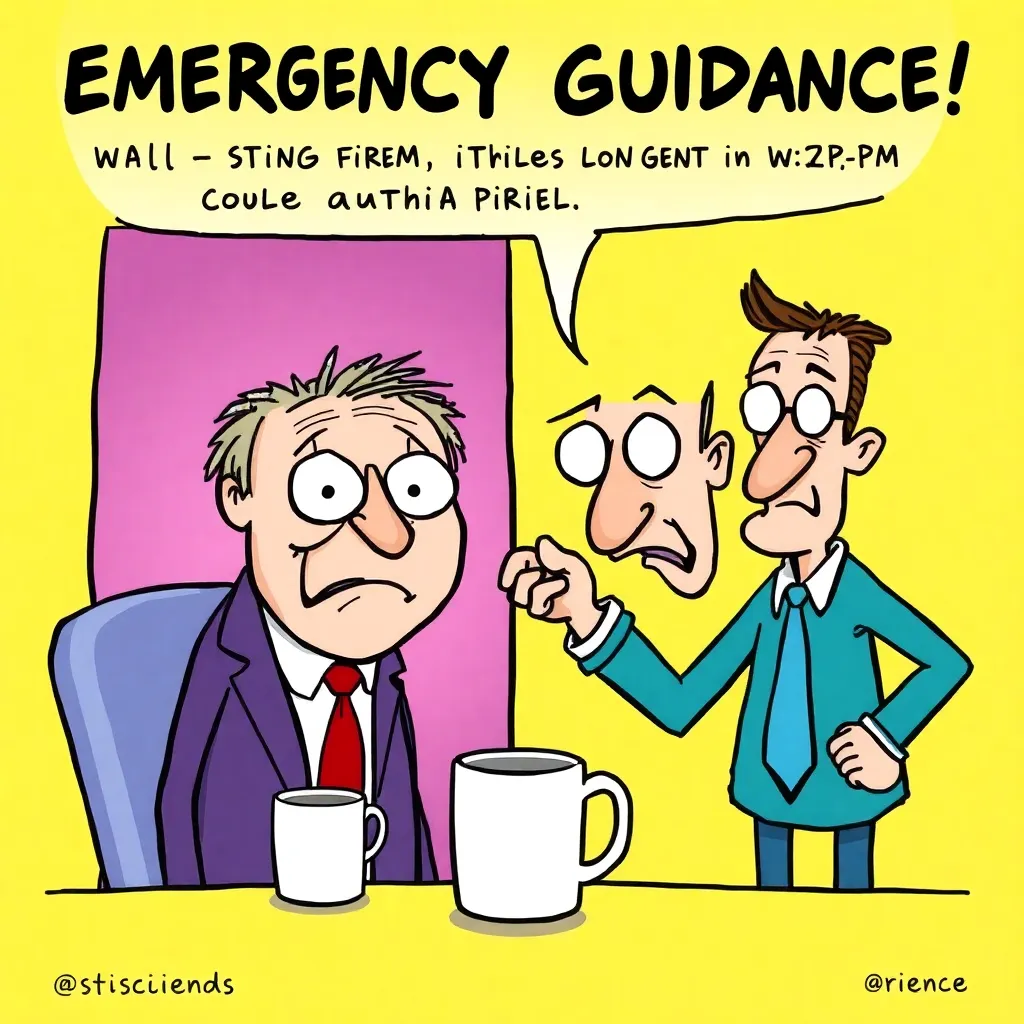
WASHINGTON, D.C. — The National Institute of Thermal Sciences (NITS) issued an urgent public safety advisory Monday following the publication of a landmark peer-reviewed study in the journal Applied Warmth Quarterly confirming that hot coffee placed on a countertop at room temperature will, over a period of hours, become cold. The study, which consumed $4.7 million in federal research funding and involved 340 participants across eleven states, describes the temperature change as 'gradual, directional, and thermodynamically binding.'
The 612-page report, titled 'Unattended Thermal Gradient Displacement in Common Household Beverages: A Longitudinal Crisis,' concludes that heat, when not continuously reintroduced into a liquid, will 'exit the liquid and disperse into the surrounding ambient air environment in a manner that is both measurable and, experts warn, not reversible without intervention.'
'What we found was deeply unsettling,' said Dr. Pamela Voss, lead researcher and Director of the NITS Center for Beverage Thermodynamics. 'The coffee was hot. Then it was not hot. The hotness had, by all accounts, left. We are still processing what this means for society at large, and for my personal morning routine specifically.'
The advisory, issued jointly by NITS and the newly formed Federal Mug Oversight Subcommittee, urges all Americans to 'exercise caution when placing a warm beverage on a surface and walking away from it for an extended period, as the beverage will not take steps to maintain its own temperature without human or mechanical assistance.'
Authorities stress that the danger, while not immediately life-threatening, is described in official documentation as 'mildly deflating and disproportionately common on busy workdays.'
'We want to be absolutely clear,' said FEMA liaison and thermal preparedness coordinator Gerald Oates at a press conference Tuesday. 'If you leave a hot coffee on your desk and attend a two-hour meeting, that coffee will be cold when you return. The coffee will not have kept itself warm. This is not a malfunction. This is physics, and physics does not care about your schedule.'
Criticism of the study has emerged from several corners of the scientific community. Dr. Felix Drummond of the Independent Beverage Research Collective called the findings 'aggressively obvious,' adding that his organization had reached the same conclusions in 1987 'using a mug, a clock, and one finger.'
NITS researchers pushed back firmly. 'With all due respect to Dr. Drummond,' said co-author Dr. Voss, 'his 1987 findings lacked a control group, a federal grant, and a seventeen-slide PowerPoint confirming that the cold coffee was, in fact, the same coffee that had previously been hot. Ours has all three.'
The advisory recommends that citizens consider using a thermos, a mug warmer, or 'the simple act of drinking the coffee while it is still hot, which remains, as of publication, a viable and legally permissible option in all fifty states.'
A follow-up study examining whether soup also cools down is currently in the proposal phase, with an estimated budget of $6.2 million and an expected completion date of 2028. Officials describe the research as 'urgent, necessary, and in no way connected to the fact that Dr. Voss had a very bad lunch last March.'