Federal Lawmakers Issue Bipartisan Statement Confirming They Were Present At Vote They Voted In, Note Personal Attendance Was 'Corroborated By The Voting Record And Also By Being There'
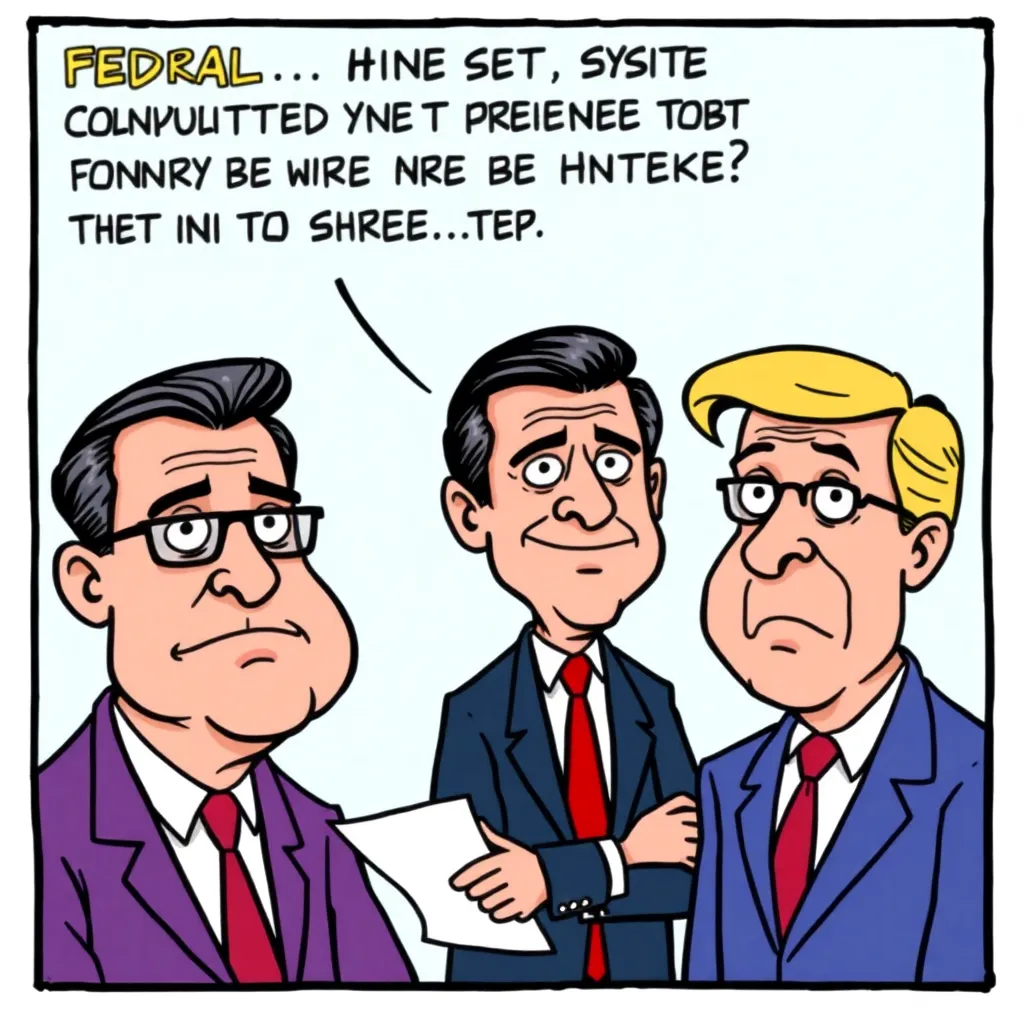
WASHINGTON, D.C. — The Department of Nonsense released a landmark 614-page policy framework on Thursday formally confirming that laws passed by members of Congress are, in the immediate and subsequent period following their passage, known about by the members of Congress who passed them. The document, titled 'Awareness of Legislative Outcomes Among Legislators Who Legislated: A Framework for Understanding What They Knew and When, With Particular Emphasis on the Fact That They Were the Ones Who Did It,' is being described by department officials as 'the most thorough treatment of congressional self-awareness produced in a non-election year.'
Department Secretary Cornelius T. Waffle, who has led the agency since its founding following the Procedural Reorganization Act of 2019, said in a prepared statement that the findings represent a genuine contribution to the public record. 'We felt strongly that this needed to be documented,' said Secretary Waffle. 'Laws do not pass themselves. People pass them. Those people are then, by definition, aware that the laws exist, because they made them exist. That causal chain is now in writing, and we believe that is an improvement over it not being in writing.'
The report, which required four years of research, eleven interdisciplinary working groups, and a budget described in the appendix as 'considerable and also itemized,' stops short of drawing conclusions about whether lawmakers read the laws they pass before passing them, a question that the authors note 'fell outside the current scope but has been flagged for Volume II.'
Dr. Pamela Grundish, Senior Fellow at the Institute for Governance Outcomes and Procedural Residue, praised the report as 'overdue.' 'What we've lacked, as a democracy, is formal documentation that the people voting on legislation have been informed of the legislation's existence at minimum by the act of voting on it,' said Dr. Grundish. 'That loop is now closed. Legislatively speaking, this is a closing of a loop.'
Not all experts were uniformly celebratory. Professor Wendell Hucks of the Center for Regulatory Epistemology cautioned that the report, while 'directionally sound,' raises uncomfortable follow-up questions. 'If lawmakers know about the laws they pass,' said Professor Hucks, 'we must then ask whether they also know about the laws they do not pass, and if so, how. That is a different report. I would like to write that report. I have already begun the title.'
The framework includes seventeen appendices, a glossary of terms including 'bill,' 'law,' 'Congress,' and 'aware,' and a two-page executive summary that department officials confirmed 'summarizes the full document in a shorter format, which is what executive summaries are for, and we wanted to note that in the summary itself.'
In a rare moment of bipartisan response, both parties issued statements acknowledging receipt of the report. A spokesperson for the majority confirmed the document had been received and was 'under review by staff who are aware of it.' A spokesperson for the minority confirmed the same, adding that they 'had some concerns about the font used in Section 4, which is a separate matter.'
The Department of Nonsense has indicated that a public comment period will remain open for sixty days, after which all comments will be compiled, reviewed, and placed in a binder described in the federal register as 'thick and also three-ring.'