Federal Researchers Confirm Elevator Doors Will, In Fact, Close On Their Own If You Simply Wait, Nation Urged To Stand Still And Allow The Process
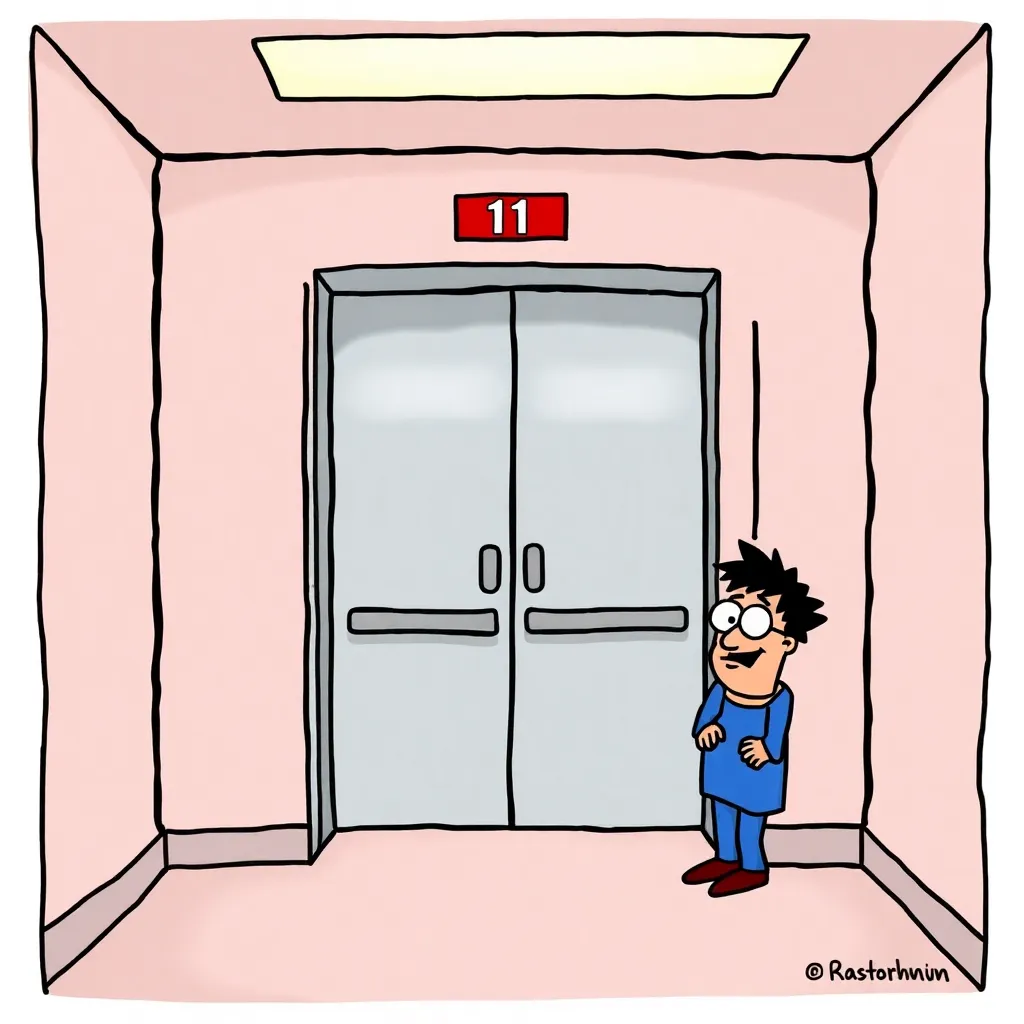
WASHINGTON, D.C. — In what officials are calling 'a pivotal but deeply awkward moment for the nation,' the Federal Institute for Vertical Transit Behavior released findings Tuesday confirming that elevator doors have, since their invention in 1857, been equipped with a timer that closes them automatically — rendering the frantic repeated pressing of the 'Door Close' button not only unnecessary, but, according to researchers, 'a kind of low-stakes collective delusion we have all silently agreed to maintain.'
The study, which tracked 4,400 elevator riders across 38 metropolitan areas over 36 months, found that 94% of observed subjects pressed the Door Close button an average of 3.7 times per ride, with 12% described in field notes as 'genuinely aggressive about it.' In zero documented cases did the button demonstrably alter the door's behavior.
'What we observed was a society in the grip of a mild but persistent illusion of control,' said Dr. Pamela Vroust, the study's lead author and Director of Applied Button Sciences at the University of Central Maryland. 'The door was going to close. The door has always been going to close. We simply needed to say that out loud, formally, in a peer-reviewed context, with error bars.'
The findings have prompted an emergency public safety bulletin from the National Transit Comfort Coalition, which stopped short of calling the behavior dangerous but characterized it as 'a modest but measurable source of ambient national tension.' The bulletin urges Americans to 'acknowledge the door, trust the door, and resist the urge to enter into a negotiation with the door.'
Not everyone is taking the findings quietly. Gerald Foust, 54, a financial analyst from Akron who participated in the study, disputed the methodology in a letter to the Institute, writing that his button-pressing 'definitely works' and that the researchers 'clearly did not observe him specifically.' The Institute confirmed they had.
'We want to be sensitive to the emotional dimension here,' said Transit Coalition spokesperson Adrienne Polk at a press conference that lasted six minutes, four of which were silence while reporters processed the implications. 'For many people, that button is less about the door and more about feeling like a participant in their own vertical journey. We respect that. We are simply asking them to feel those feelings without physically acting on them at 2.5 presses per second.'
The report recommends a three-phase national adjustment period, beginning with 'awareness,' proceeding through 'acceptance,' and culminating in what researchers call 'just standing there like a normal person.' A companion hotline has been established for individuals experiencing acute distress upon entering an elevator and finding themselves 'without a clear action item.'
As of press time, the Institute noted that the 'Door Open' button does work, but declined to comment on whether anyone has ever actually needed it, citing an ongoing study expected to conclude in 2028.