Global Coalition Of Thermal Scientists Releases 614-Page Report Establishing That A Fire Measured At High Temperatures Was, In Fact, Measuring At Those Temperatures At The Moment Of Measurement, Heat Verification Officers Confirm Reading Was 'Thermometer-Dependent, Real-Time, And Higher Than Comfortable'
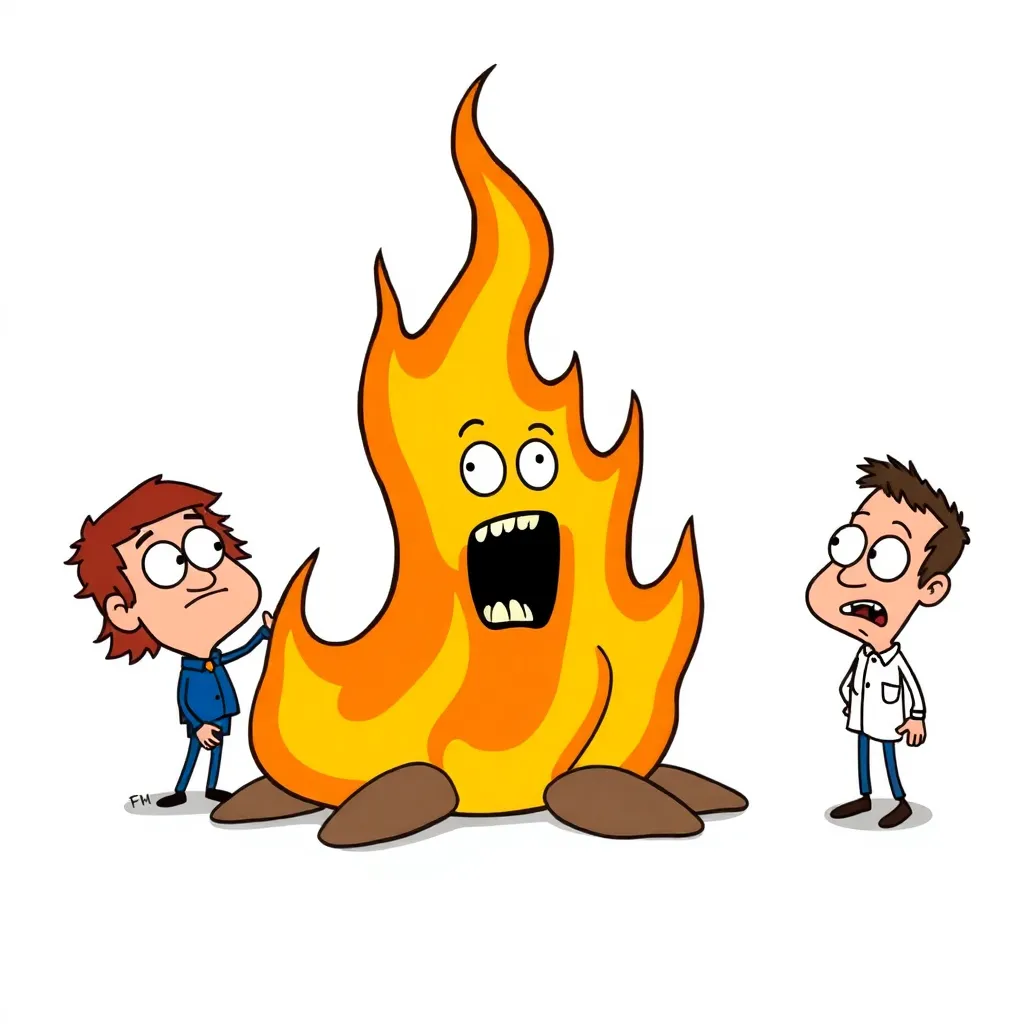
GENEVA — In what leading researchers are calling the most consequential thermal investigation since someone first held their hand too close to something burning, an international coalition of fire scientists has released a landmark 614-page peer-reviewed study formally establishing that fire, when measured for heat, registers as hot at the precise moment the heat is being measured.
The Multinational Combustion Temperature Verification Consortium, comprising researchers from nine countries and funded by an undisclosed sum described only as 'substantial and, in retrospect, a lot,' spent seven years collecting temperature readings from open flames across four continents before concluding, in unambiguous scientific language, that the fires were hot.
'What we can say with confidence is that the flames we measured — and I want to be precise here — were, at the moment we were measuring them, exhibiting thermal properties consistent with being on fire,' said Dr. Renata Voss, the study's lead author and Director of Ongoing Heat at the University of Lausanne. 'This was not assumed. This was confirmed. With a thermometer. Repeatedly.'
The study, published Thursday in the Journal of Verified Combustion Outcomes, addresses what researchers describe as a long-standing gap in the scientific literature: namely, that while fire had been widely believed to be hot, no multisite longitudinal study had formally established that the heat present in fire was thermally occurring during the fire itself and not, for instance, slightly before or after.
'There was a real epistemological vacuum here,' said co-author Dr. Marcus Filby of the Copenhagen Institute for Things That Are Warm. 'We knew fire was associated with heat. What we didn't have was documentation that the heat and the fire were temporally co-located. Now we do. It took forty-three researchers and a budget I've been asked not to disclose.'
Critics have questioned the scope of the project, with several independent scientists noting that fire's hotness has been, in their words, 'more or less accepted since approximately the Paleolithic era.' Dr. Voss dismissed these concerns, arguing that informal acceptance is not the same as a peer-reviewed confirmation with error bars.
'Anyone can feel that fire is hot,' she said. 'But can they quantify that hotness, cross-reference it against seventeen flame sources, and present the findings at a four-day symposium in a hotel that was, ironically, quite cold? No. We did that. That's the work.'
The study further confirmed that the hottest part of each flame tested was hotter than the less hot parts, a sub-finding that required an additional eighteen months of analysis and a supplemental grant. Thermal gradient consultant Pieter Anholm described this discovery as 'directional, luminosity-adjacent, and something you could have predicted by looking at the fire, though we chose not to until the data was in.'
The consortium says follow-up research is already underway to determine whether fire that has gone out is still hot, and if so, for how long, and whether that duration can be expressed as a number. Preliminary findings are expected in 2029.
'We believe the data will surprise people,' said Dr. Voss. 'Or confirm what they already suspected. Either way, it will be published.'