Independent Review Board Determines Scoreboard Has Been Accurately Reflecting Score This Entire Time, Franchises Notified, Several Dispute Findings
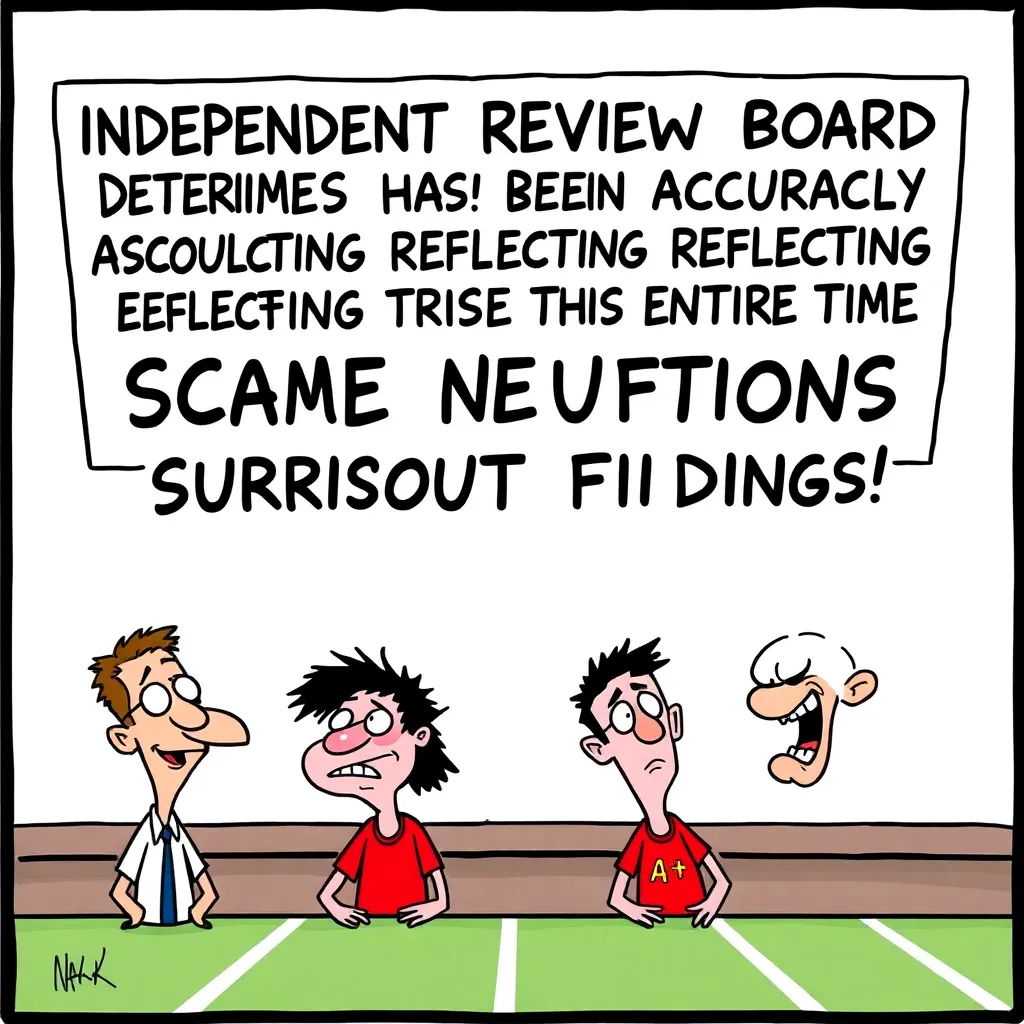
PHILADELPHIA — A landmark report released Tuesday by the Commission on Baseball Object Jurisdictional Handoff has formally confirmed that a baseball, once released from a pitcher's grip and propelled toward home plate, transitions fully out of the pitcher's sphere of legal and emotional ownership, entering what researchers are calling a 'shared atmospheric custody zone' lasting approximately 400 milliseconds.
The findings, compiled over fourteen months at a cost of $2.3 million in discretionary league funding, have been described by panel chair Dr. Arlene Fotch as 'the most important thing we have ever done, and possibly the most important thing anyone has done.'
'What we found,' said Dr. Fotch, a professor of Applied Sports Handoff Dynamics at the University of Central Delaware's satellite campus, 'is that the pitcher throws the ball, and then the ball is no longer with the pitcher. It is in the air. The pitcher is back there. The ball is out here. These are two distinct locations.' She paused to let the room absorb this. 'We have the slides to prove it.'
The report runs 847 pages, including a 212-page appendix dedicated entirely to defining the word 'release,' which commissioners say was 'more contested than anticipated.' A glossary is forthcoming, pending review.
Major League Baseball issued a cautious statement Wednesday morning acknowledging receipt of the findings and noting that 'while the Commission's conclusions are difficult to immediately refute, the league intends to form a working group to assess the implications before any formal acknowledgment is entered into the record.'
The players' union responded swiftly. In a press conference that lasted nearly forty minutes, union representative and former infield prospect Darren Glubb stated that hitters had long suspected the ball was their problem once it left the mound but had 'never seen it written down so formally, and frankly find the document alarming.'
'Our members were not consulted,' Glubb said, adjusting his lanyard. 'We would have liked to have been in the room when they determined that the ball coming at your face is your problem. That feels like something we should have weighed in on.'
Experts in the field have largely praised the report's rigor. Dr. Compton Beaule, a kinesiologist who has consulted for three teams he is not permitted to name, called the findings 'brave.' 'Science has danced around this for over a century,' Dr. Beaule told reporters. 'Everyone in baseball has privately known that the pitcher lets go and then something else has to happen. No one wanted to say it. This panel said it. I think we all owe them something.'
Not all observers were impressed. Sports columnist Teri Wanschek of the Akron Pennant-Gazette wrote in a widely circulated opinion piece that the report 'confirms, with the full weight of institutional credibility, that throwing and catching are different activities performed by different people,' adding that she 'could have told them that for significantly less than $2.3 million.'
The Commission will reconvene in March to begin phase two of the investigation, which will examine what, precisely, the catcher is supposed to do once the ball arrives, and whether any of this has implications for football.
A public comment period is open through the end of the fiscal year. Comments may be submitted in writing. They will be read.