Interagency Domestic Cooling Apparatus Oversight Panel Issues Urgent Advisory That Refrigerators Which Are Plugged In Are Currently Using Electricity To Remain Cold, Energy Continuity Analysts Warn Phenomenon Is 'Ongoing, Utility-Billed, And Occurring Behind The Vegetable Drawer'
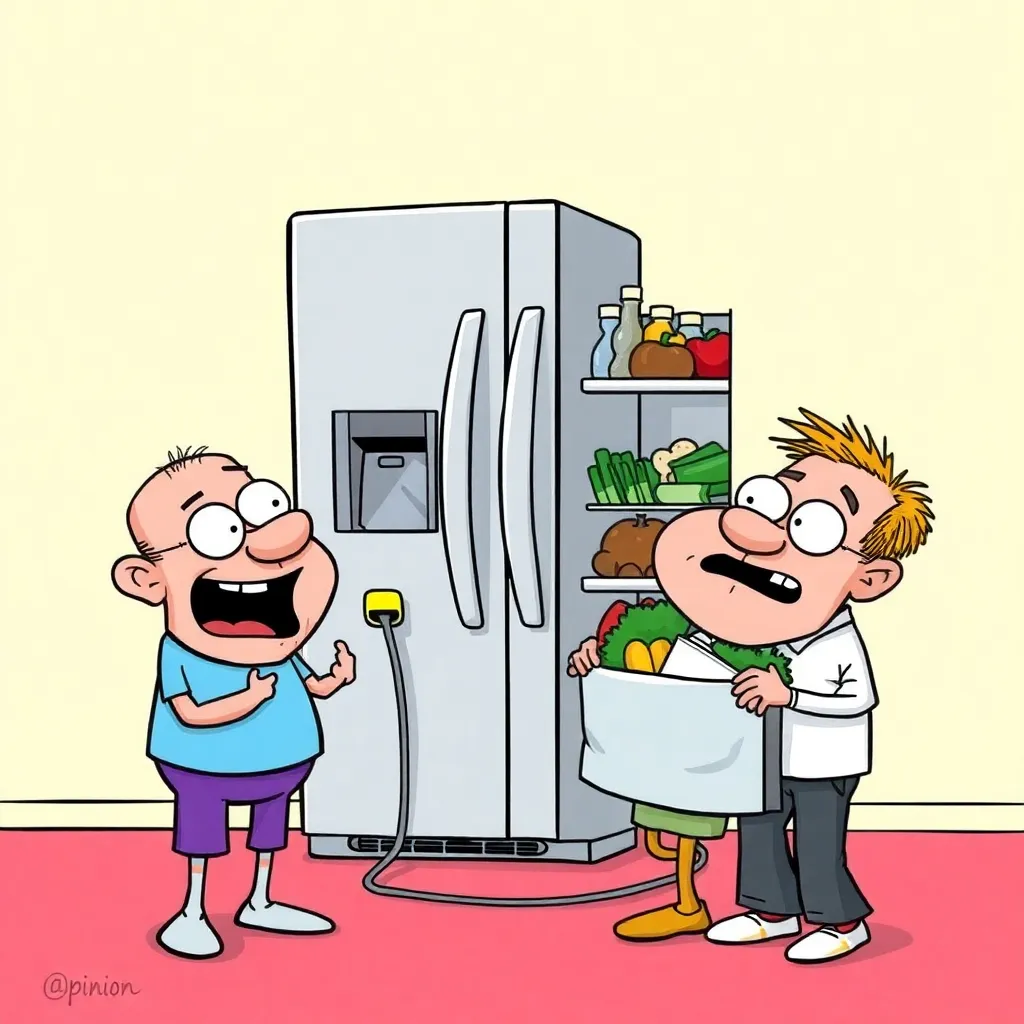
WASHINGTON, D.C. — The National Refrigerator Door Closure Continuity Institute (NRDCCI) issued an urgent public safety advisory Tuesday following the release of a peer-reviewed, federally funded, eighteen-month study concluding that cold air currently escaping from open residential refrigerators is doing so because the door, which is open, is not closed.
The advisory, which spans 612 pages including a 40-page executive summary and a separate 40-page summary of the executive summary, calls the findings 'among the most thermodynamically significant discoveries of the fiscal quarter' and urges all Americans to be aware that their refrigerator, if open, is presently open.
'What we found, and this is really the crux of it, is that the cold air does not stay in the refrigerator when the refrigerator door is open,' said Dr. Pamela Stroud-Keffler, Lead Thermal Egress Analyst at the Institute and adjunct professor of Applied Obvious Sciences at the University of Maryland's Bethesda Annex. 'The air goes out. Through the door. Which is open. We have confirmed this across 4,200 households and the numbers are consistent.'
The study, which cost an estimated $4.7 million in federal grants, employed a team of 34 researchers equipped with handheld thermometers, stopwatches, and what the appendix describes as 'a level of professional patience that cannot be overstated.' Field agents were stationed in kitchens for up to six hours at a time to document what the report calls 'door-gap thermal migration events,' defined as instances in which cold air left a refrigerator through the refrigerator door.
The findings have been described by independent reviewers as 'rigorous,' 'alarming in their clarity,' and 'something my seven-year-old once pointed out but okay.'
Authorities are particularly concerned about what the report identifies as a 'secondary risk population': individuals who open the refrigerator, stare into it for between 45 seconds and four minutes without selecting anything, then close it and open it again 90 seconds later. The report estimates this behavior accounts for approximately 31% of all domestic cold air loss events nationwide.
'We are not here to assign blame,' said Interagency Cooling Apparatus Liaison Gerald Fitch at a press conference held inside a temperature-controlled conference room, the irony of which went unaddressed. 'We are here to make the public aware that the air, which is cold, is leaving, which it does, and that the mechanism by which it leaves is the open door, which is open.'
The advisory recommends that all Americans close their refrigerator doors after opening them, and in cases where they are unsure what they want, decide before opening the door 'where possible, or failing that, promptly and with commitment.' A federal hotline has been established for households experiencing what officials are calling 'chronic indecisive hinge engagement.'
Critics have questioned the scale of the investment. Senator Tom Braddock (R-OH) called the study 'a colossal waste of taxpayer money that confirms something printed on refrigerator magnets since 1987,' to which Dr. Stroud-Keffler responded that the senator's criticism, while noted, 'lacked the methodological framework to be taken seriously at the institutional level.'
A follow-up study is already underway examining whether refrigerators that are off are colder than refrigerators that are on fire. Preliminary results are expected by spring. Funding has been approved.