Peer-Reviewed Study Determines End Zone Located At End Of Field, NFL Franchises Notified, Two Dispute Methodology
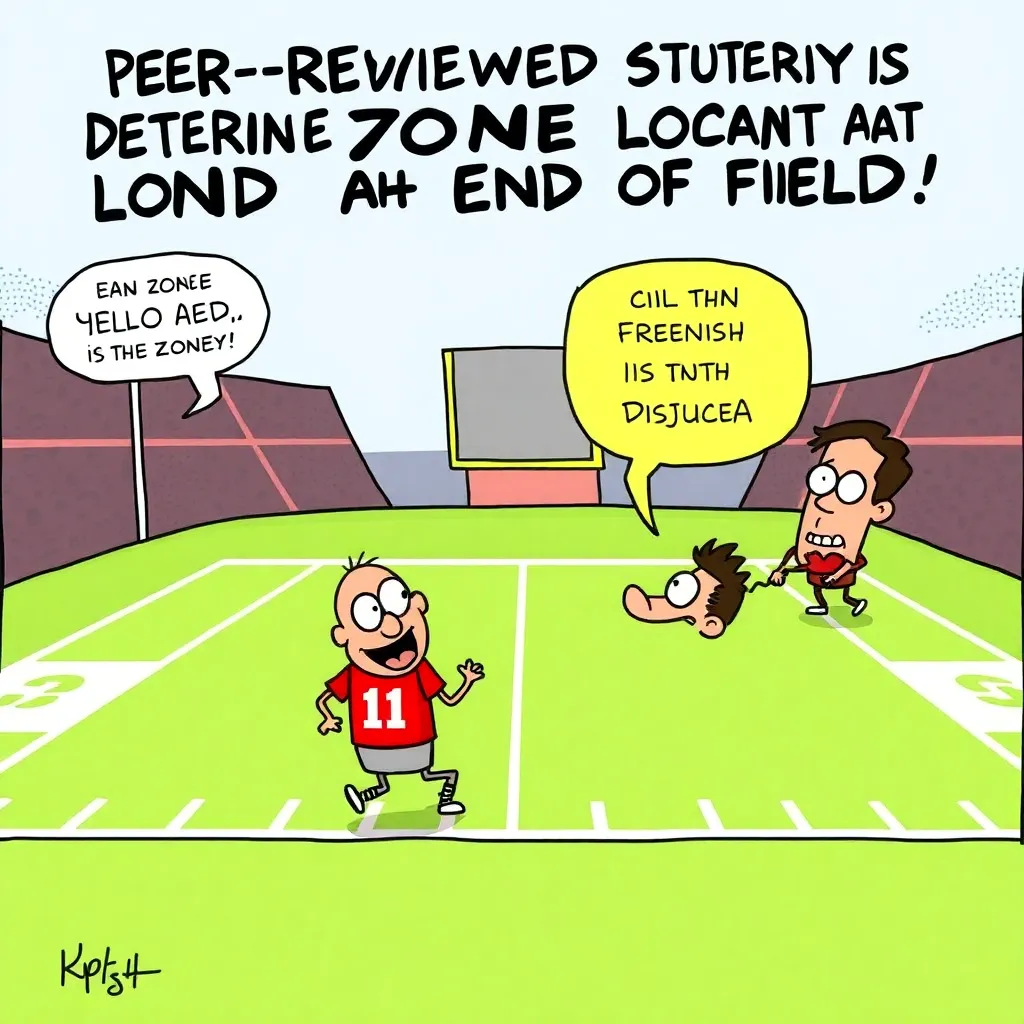
ATLANTA — The National Athletic Safety Board issued a Level 2 Public Awareness Notification on Thursday following the publication of a peer-reviewed study confirming that competitive runners have been accelerating near the finish line at rates significantly higher than baseline jogging speeds, a pattern researchers are calling 'statistically pronounced and borderline upsetting.'
The study, conducted over seven years at a cost of $4.3 million in federal grant funding, tracked 1,847 athletes across 23 disciplines and found that in 94.7% of observed races, participants ran faster at the end than at the beginning. The remaining 5.3% were described in the report's appendix as 'an area requiring further inquiry and perhaps a conversation with the athletes' respective coaches.'
'What we are seeing,' said Dr. Pamela Ostroff, lead researcher and Associate Professor of Kinetic Obviousness at the University of Central Georgia, 'is a repeatable, documentable pattern of speed increase in proximity to a clearly marked terminal boundary. We did not expect it to be this consistent. Frankly, some of us are still processing it.'
The National Athletic Safety Board responded swiftly, releasing a four-page advisory recommending that spectators at live sporting events be made aware that runners may appear to move more quickly in the final stretch and should not be alarmed if this creates a sensation of mild excitement or involuntary vocalization.
'We want the public to feel prepared,' said Board spokesperson Terrence Mulcahy, reading from a laminated card at a press conference held in a medium-sized conference room. 'If you are attending a race and you notice the athletes speeding up, please know that this is expected and poses no immediate threat to you or your belongings. We ask only that you remain aware of your surroundings and refrain from stepping onto the track.'
The advisory specifically flagged the 100-meter sprint as a 'high-incidence zone' for the phenomenon, noting that the acceleration occurs rapidly and with little warning beyond the starting gun, which the report describes as 'a known precursor event.'
Not everyone in the athletics community has embraced the findings. Harold Bintz, head coach of the Tulsa Regional Track Club, called the study 'an extraordinary use of time and money to confirm something my eight-year-olds figured out during their second practice.' Dr. Ostroff acknowledged the criticism but stood by the methodology, noting that anecdotal coach observations had never been peer-reviewed and therefore could not be considered scientifically actionable.
A follow-up study is already in progress examining whether athletes who win races tend to cross the finish line before athletes who do not win. Preliminary data is expected by 2027, with a full report anticipated sometime before the end of human athletic competition as a concept.
The Level 2 Advisory will remain in effect through the end of the current track season, after which the Board says it will reassess whether the phenomenon continues or whether athletes have, for unknown reasons, begun slowing down near the end instead. Officials say they are 'open to either outcome' and 'genuinely cannot rule anything out at this stage.'