PUBLIC SAFETY ALERT: Kendall-Area Protective Order Oversight Subcommittee Releases 340-Page Compliance Report Confirming That A Document Which Was Not Issued Did Not Exist At The Time It Was Needed, Legal Instrument Continuity Analysts Describe Absence As 'Form-Based, Bureaucratically Sound, And Temporally Inconvenient'
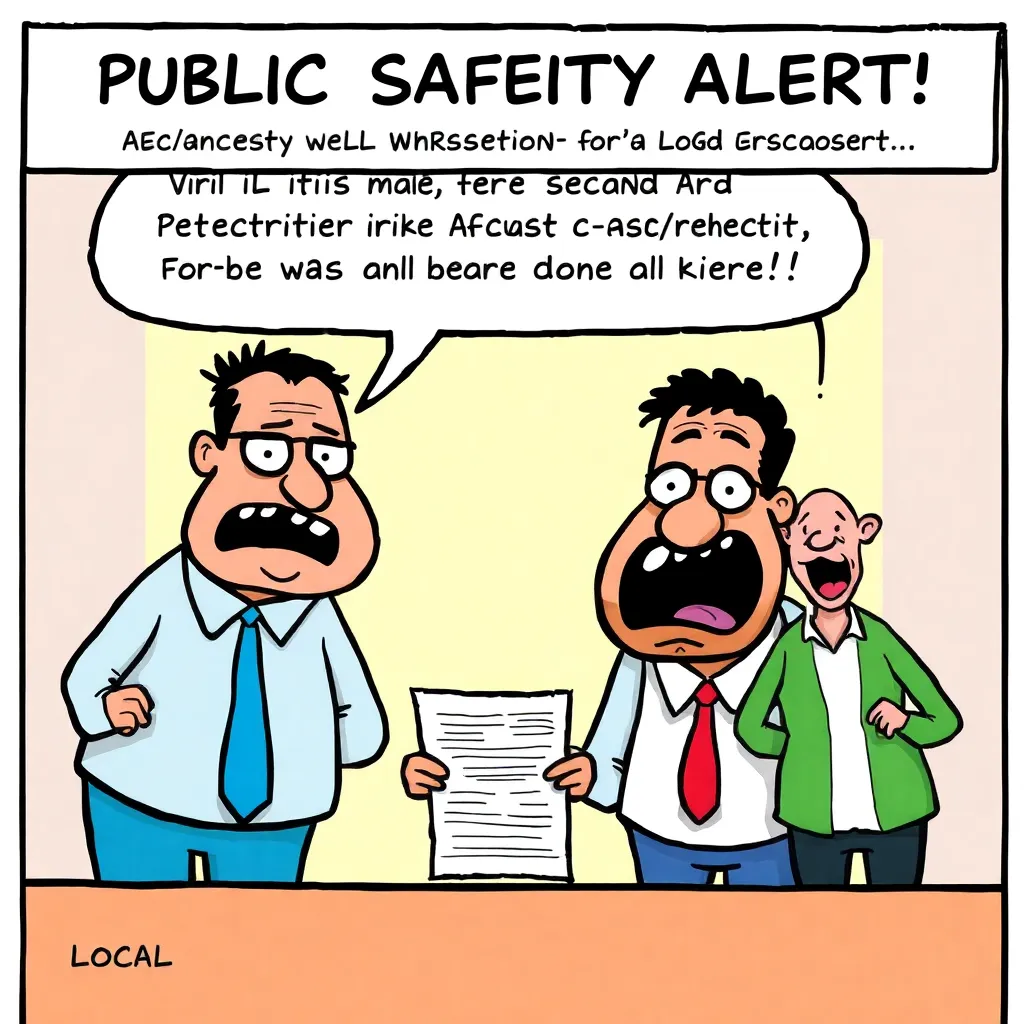
KENDALL, FL — The South Florida Interagency Legal Document Issuance and Non-Issuance Continuity Bureau held a joint press conference Tuesday to formally announce the findings of a 340-page compliance report confirming that a protective order which was denied by the court on Day One was, by Day Twenty-Two, still denied, and had therefore not materialized in any legally enforceable form between those two dates.
'This was not an oversight on our part,' said Deputy Subcommittee Chair for Judicial Instrument Deployment Raúl Figueroa-Blanco, gesturing to a laminated flowchart that read 'DENIED → NOT ISSUED → CONTINUES TO NOT EXIST.' 'The order was reviewed. The order was assessed. The order was declined. Everything after that is simply the natural temporal progression of a declined order continuing to be declined, as declined orders do.'
The report, which took eleven weeks to produce and required sign-off from four separate bureaus, the Protective Paper Verification Consortium, and an outside consultant who specializes in 'document absence mapping,' concluded that the absence of the order at the time of the incident was 'chronologically expected, application-traceable, and not the result of the document being lost, misplaced, or stolen, but rather the result of it never having been created, which is what happens when an order is not issued.'
A supplementary appendix, spanning pages 201 through 298, addresses the question of whether a protective order that was not issued could have, under any circumstances, protected anyone during the period in which it was not issued. The appendix concludes: 'No. Analysts note this finding was available on Day One at no additional cost to the bureau.'
Officials from the Kendall Municipal Paperwork Timing Review Office praised the report as 'thorough,' 'well-indexed,' and 'arriving at the precise moment when arriving at anything is least useful.'
When a reporter asked whether the system had failed the victim, Figueroa-Blanco consulted a binder, referred the question to the Binder Contents Liaison, who referred it to the Liaison's supervisor, who noted the question was 'outside the scope of the current compliance framework' and suggested submitting it in writing using Form J-14, which is available on a website that has been under maintenance since March.
The bureau confirmed it will reconvene in approximately eight months to release a follow-up report establishing that the original report was released, that its findings remain the findings, and that protective orders which were not issued in the past were also not issued during the writing of the follow-up report.
At press time, the Task Force had launched a third working group to determine whether future protective orders could theoretically be issued before they are needed, a concept analysts described as 'temporally radical, logistically complex, and somehow not yet a standard practice.'