PUBLIC SAFETY ALERT: Researchers Confirm That Applause Occurring At End Of Concert Was Triggered By Concert Having Ended, Acoustics Panel Urges Audiences To 'Clap Intentionally And With Full Knowledge Of What They Are Responding To'
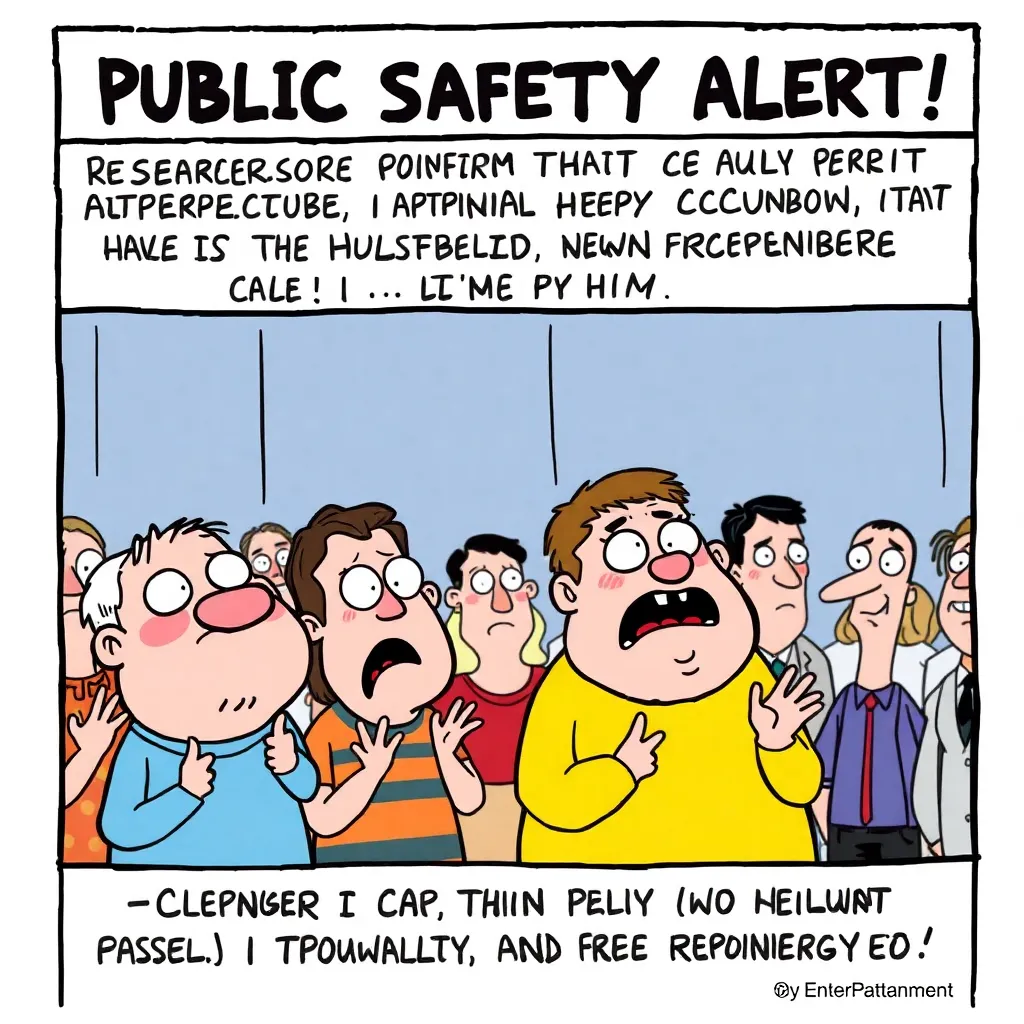
WASHINGTON, D.C. — The National Consortium for Audience Response and Percussive Enthusiasm (NCARPE) issued an emergency public safety bulletin Wednesday following the release of a landmark 714-page scientific study confirming that applause documented at the conclusion of live entertainment events was causally linked to those entertainment events having concluded.
The study, titled 'Post-Performance Clapping: A Temporal and Motivational Analysis of Hand-Based Crowd Enthusiasm in Sequential Event Contexts,' was conducted over eleven years across 4,200 live venues and involved the acoustic monitoring of approximately 38 million individual claps. Researchers say the findings were, in their words, 'robust, peer-reviewed, and something we probably could have figured out faster.'
'What we discovered,' said Dr. Pamela Troutworth, the study's lead author and Director of Responsive Sound Dynamics at the fictional but impressively named Institute for Post-Show Acoustic Phenomena, 'is that in roughly 99.7% of cases, the applause began after the performance. Not during it. Not before it. After. This is a pattern we consider significant and also technically the definition of what applause is.'
The remaining 0.3% of cases involved a man named Gerald in the third row of a 2019 Steely Dan concert who began clapping approximately forty seconds before the band took the stage. Researchers say Gerald has been notified and is 'cooperating with the inquiry in a limited capacity.'
The public safety bulletin, issued jointly by NCARPE and the Bureau of Entertainment Crowd Logistics, urges all Americans attending live performances to pause before initiating applause and confirm, to the best of their ability, that the performance they intend to applaud has in fact occurred.
'We are not asking audiences to stop clapping,' said Bureau spokesperson Todd Fineman, reading from a prepared statement in a voice that suggested he was deeply aware of how his life had gone. 'We are simply asking that the clapping be preceded by a brief internal audit confirming that something clap-worthy has taken place. A three-to-five second verification window is considered sufficient by the panel.'
The bulletin further warns that 'unanchored applause,' defined as clapping that cannot be attributed to a specific triggering event, represents a 'low-level but documentable disruption to shared social meaning' and should be reported to venue staff using the newly developed Audience Feedback Incident Form, which is twelve pages long and available only in print.
Critics of the study have called its conclusions 'self-evident to a degree that borders on aggressive,' while supporters argue the data fills a critical gap in the scientific literature.
'People assume we know why we clap,' said Dr. Troutworth. 'They assume. We measured. Those are different things. One of them took eleven years and a federal grant.'
The full report is available through NCARPE's website. A summary version is available for those who prefer not to read 714 pages about clapping. The summary is 340 pages. A summary of the summary is forthcoming pending a budget review expected to conclude no earlier than the second quarter of next year.
The public is advised to remain calm, attend concerts responsibly, and clap only in full awareness of what they are doing and why. Gerald could not be reached for comment.