PUBLIC SAFETY ALERT: Tri-County Door Interaction Monitoring Bureau Urges Citizens To 'Proceed With Caution' After Revolving Door In Downtown Hartwell Continued To Revolve In The Same Direction It Has Always Revolved, Notes Direction Was 'Marked, Consistent, And Rotating'
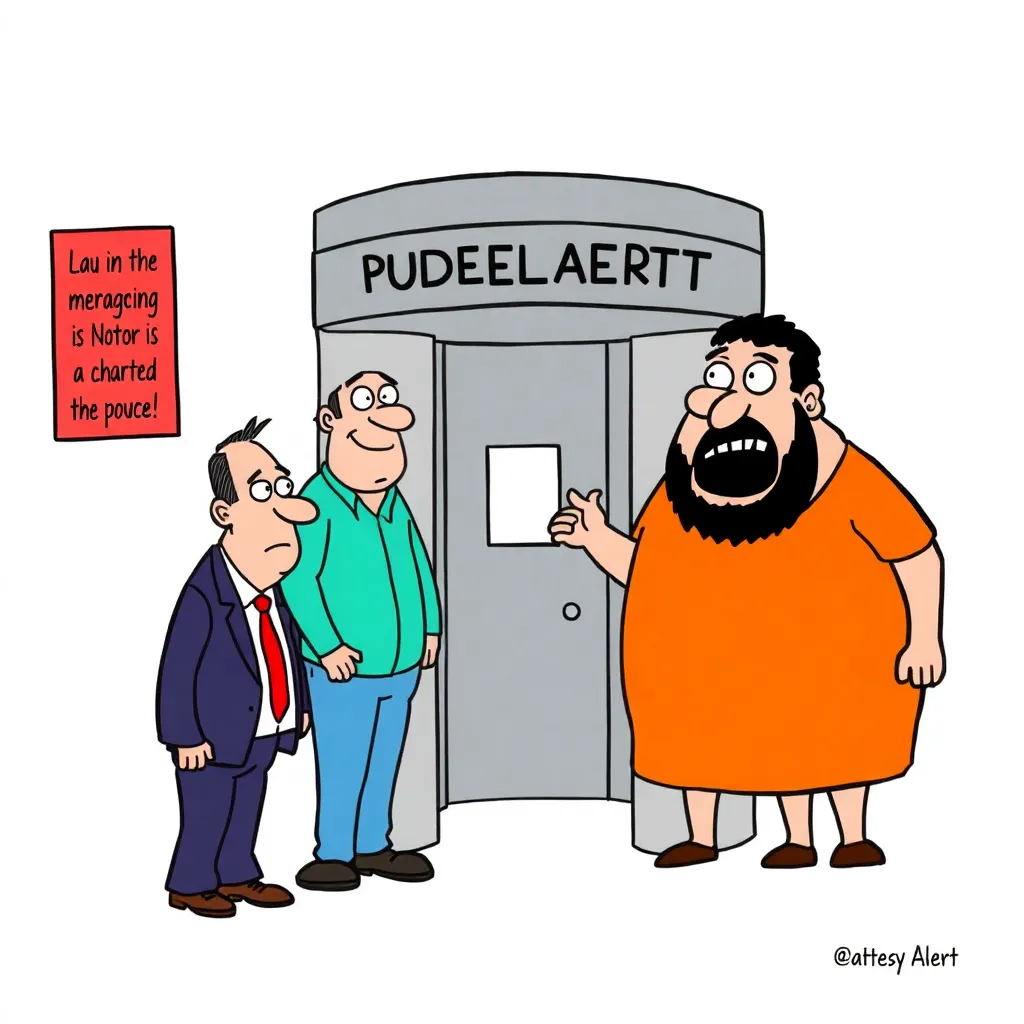
WASHINGTON, D.C. — The National Pedestrian Oversight Council issued an urgent public safety advisory Thursday following what officials are calling a 'months-long and frankly exhausting' accumulation of evidence suggesting that doors bearing the printed instruction 'Push' have continued to necessitate a pushing motion in order to open, despite a significant portion of the American public approaching them with a confident, sustained, and wholly incorrect pulling force.
The advisory, spanning 340 pages with an 18-page executive summary and a separate 4-page summary of the executive summary, concludes that the door signage has been 'affixed, legible, and directionally accurate' since at minimum the installation date of each door surveyed, which in some cases dates back to 1987.
'We want to be very clear,' said Dr. Pamela Gourdsworth, Senior Fellow at the Institute for Threshold Dynamics and Transitional Ingress, in a statement released alongside the report. 'The door was labeled. The label said Push. The correct action was, and remains, pushing. We have found no evidence to suggest this was ever not the case, including during periods when people were pulling it very hard.'
The advisory comes after field researchers embedded in thirty-two metropolitan areas documented over 14,000 incidents in which participants approached a clearly marked Push door, gripped the handle, and pulled. In 91% of cases, subjects then looked briefly at the door, then at their own hand, then pulled again, before eventually pushing the door open and walking through as if nothing had occurred.
In a troubling subset of cases, subjects were observed pulling the door, failing, stepping back, pulling again with more conviction, and then — in what investigators described as 'an escalation that was difficult to watch in real time' — trying to push and pull simultaneously.
'That's a lateral shimmy,' said Marcus Fendt, a door-behavior analyst and author of the forthcoming book 'Against Pulling: A Manifesto.' 'At that point the door is not the problem. The door has been doing exactly what it said it would do. The door is, if anything, the most reliable participant in this interaction.'
The advisory urges all Americans to pause before engaging with any door and to read available signage before committing to a directional force. Officials note that in the event signage is absent, citizens may attempt both pushing and pulling in a calm, sequential manner, and should under no circumstances attempt both simultaneously, as this 'creates a lateral shimmy situation, and nobody needs that.'
The Council further recommends that building managers consider installing larger signs, though a spokesperson acknowledged that a pilot program featuring signs reading 'PLEASE PUSH THIS DOOR, WE ARE BEGGING YOU' yielded 'marginally improved outcomes but also a lot of confused staring.'
Authorities emphasize that this alert does not cover automatic doors, which, officials note in a separate footnote, 'open by themselves and have been doing so since their installation, a fact that some members of the public appear to find surprising each time it happens.'
Citizens with questions are encouraged to contact the National Pedestrian Oversight Council's public hotline, which is accessible through a door that is, officials confirm, marked Push.