Tech Giant Announces New Flagship Product: The Sky, Now With Mosquitoes
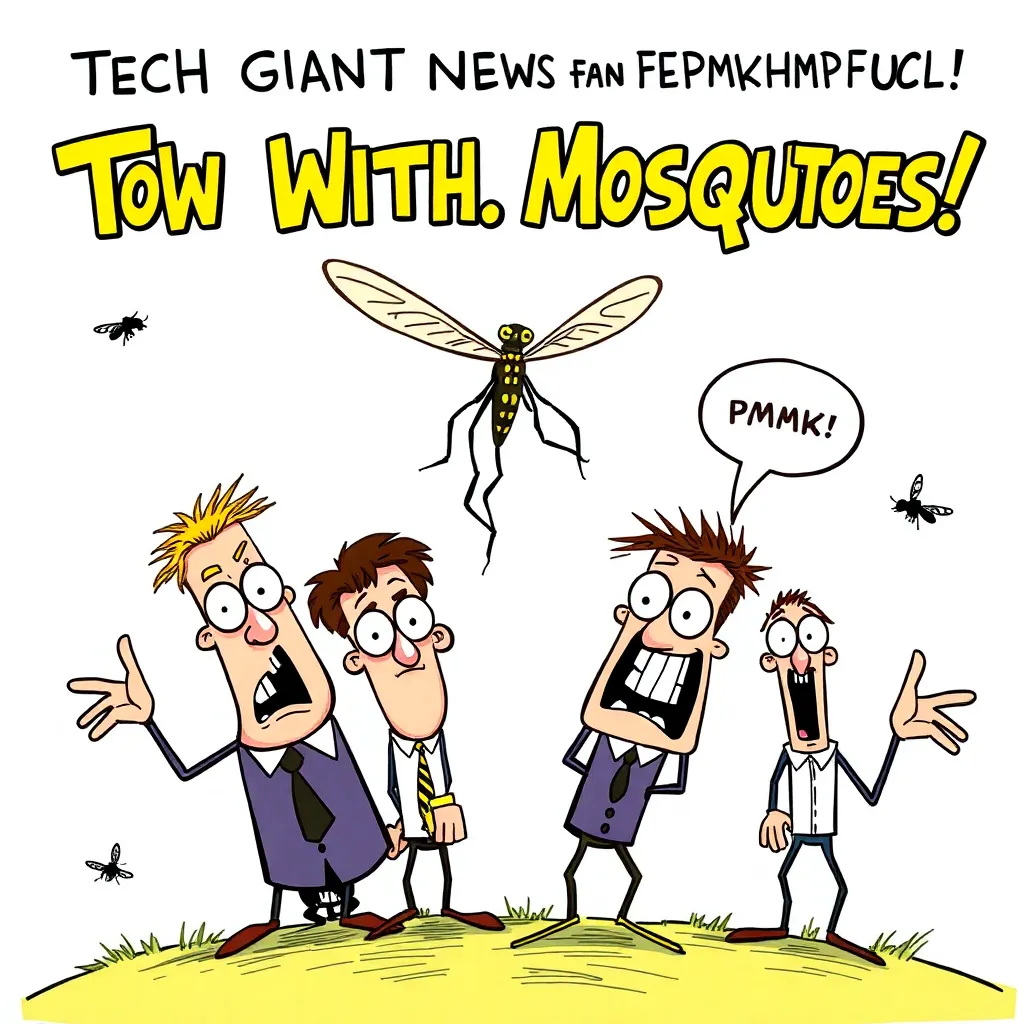
MOUNTAIN VIEW, CA — Google's biannual all-hands meeting entered what communications staff are calling 'an unexpected pivot moment' Thursday afternoon when Senior Director of Ecological Deployment Chad Rennick advanced past a slide about parking garage etiquette directly into a 47-page deck outlining the company's pending federal request to release sixty-four million bacteria-infected mosquitoes into open American airspace.
Attendees, who had been mildly engaged through discussions of the new hybrid work calendar and a Doodle redesign, reportedly sat in complete silence for approximately eleven seconds before someone in the back row said, 'Sorry, can you go back one slide?'
'We want to be transparent,' said Rennick, clicking forward instead of back. 'This is part of our broader commitment to moonshot initiatives that improve human health, streamline ecosystems, and expand our addressable market into the biological sector.'
The initiative, internally codenamed 'Project Wingspan,' involves infecting male mosquitoes of the Aedes aegypti species with Wolbachia bacteria and releasing them into the wild, where they will mate with disease-carrying females and suppress local populations. Google's regulatory filing, submitted quietly to the U.S. Environmental Protection Agency between a DMCA notice and a routine data center permit, describes the release as 'a targeted, time-limited ecological optimization event.'
Scientists consulted by this publication confirmed they are, in fact, not worried, a position several of them found difficult to explain to their spouses at dinner.
'The bacteria doesn't harm humans, the mosquitoes can't reproduce, and the whole thing has been tested extensively,' said Dr. Patricia Elms of a university that requested not to be named because, in her words, 'we just don't want the emails.' 'It's genuinely fine. The science is solid. I understand why people are alarmed, but they really don't need to be.' She then stared into the middle distance for a moment before adding, 'It's the framing I take issue with.'
The framing in question includes a slide titled 'Swarm-as-a-Service: Phase One,' a go-to-market timeline that lists 'atmospheric deployment' under Q2 milestones, and a projected ROI graphic that someone in design had inexplicably formatted to resemble a mosquito in a graduation cap.
Following the meeting, Google's internal Slack channel #general received 2,400 messages in eighteen minutes, the majority of which were variations of the cry-laughing emoji and one very long thread from a software engineer in Dublin asking whether this qualified for sustainability credits.
A spokesperson for Google issued a statement Friday morning clarifying that the program is 'consistent with established public health frameworks,' that the bacteria are 'naturally occurring,' and that the company 'remains deeply committed to not giving anyone malaria, which has always been our position.'
Local officials in the counties adjacent to the proposed release zones held a joint press conference Saturday at which they stood behind a podium for twenty-two minutes, said the words 'we have been briefed,' and then declined to take questions on the grounds that the microphone was 'acting up.'
At press time, Google had updated its support documentation to include a new FAQ section titled 'About The Mosquitoes,' the first entry of which reads: 'Q: Should I be concerned? A: Scientists say no. We agree with scientists. Please see our community guidelines for more information.' The link to the community guidelines redirects to the Google homepage.
The application is currently under federal review. The mosquitoes are, by all accounts, ready.