UN Declares Global Emergency After World's Diplomats Realize They've Been Nodding Politely Without Understanding Anything For 78 Years
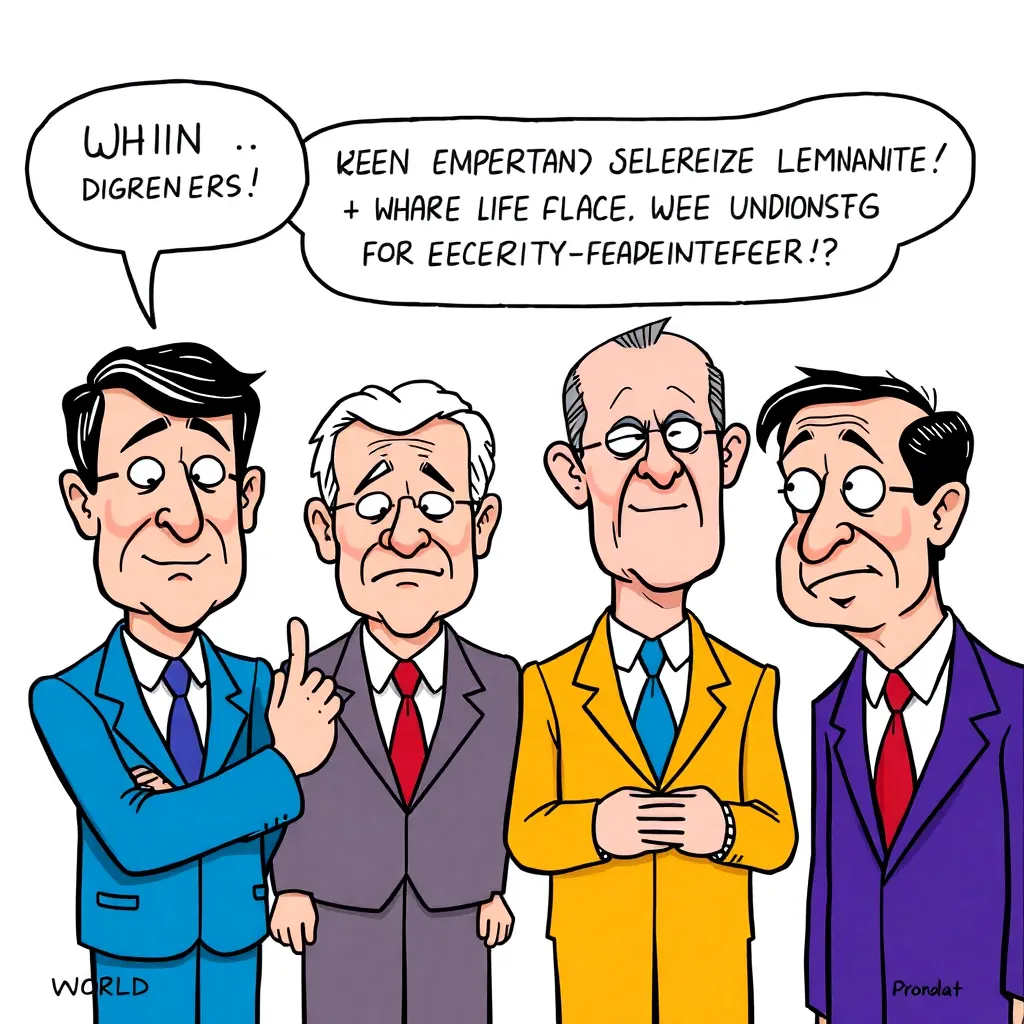
GENEVA — The United Nations declared an unprecedented diplomatic emergency Monday after a routine internal audit uncovered what officials are calling 'the most catastrophic collective nodding incident in recorded human history,' confirming that virtually every world leader, ambassador, and senior diplomat has been bluffing their way through international summits for nearly eight decades.
The 4,000-page report, titled 'Did Anyone Actually Read Any Of This,' found that since the organization's founding in 1945, an estimated 94% of delegates attending multilateral negotiations had, at any given moment, absolutely no idea what was being discussed and were simply mirroring the facial expressions of the person seated directly to their left.
'We ran the numbers three times because we simply refused to believe them,' said Dr. Helga Nortström, the Swedish organizational psychologist who led the audit team. 'What we discovered is that international diplomacy has essentially been one long, extremely expensive game of telephone played by people who were all too embarrassed to ask what a quorum was.'
The report identified a phenomenon researchers are calling 'Recursive Diplomatic Deference Syndrome,' in which each delegate assumes the other delegates understand what is happening and therefore adjusts their own behavior to appear equally informed, creating an infinite loop of performative comprehension that has apparently been shaping global policy since the Truman administration.
Former U.S. Ambassador Richard Cheltenham, 74, broke down during a press conference in Washington, admitting he had spent eleven years representing American interests at the UN Security Council despite never once understanding the difference between a resolution and a declaration. 'I just watched which way France was leaning and did the opposite,' Cheltenham confessed, dabbing his eyes with an American flag pin he had removed from his lapel. 'That's just how we were trained.'
Particularly alarming was the discovery that the landmark 1987 Montreal Protocol on ozone-depleting substances — long celebrated as a triumph of international cooperation — was signed after a four-hour negotiation during which all twenty-four participating nations had independently concluded that someone else was definitely taking notes.
'At one point, the entire room was waiting for Burkina Faso's delegate to finish a point he was making,' the report noted, 'but he had actually stopped talking eleven minutes earlier and was waiting for someone to respond. No recording of what he said exists.'
UN Secretary-General António Guterres addressed the crisis in a brief statement, assuring member nations that corrective measures were being implemented immediately, including mandatory 'I actually don't understand this' paddle systems, a buddy program pairing confused delegates with slightly less confused delegates, and a new rule requiring all proposed resolutions to be explained using only diagrams of farm animals.
'The good news,' Guterres said, pausing for a very long time, 'is that we are addressing this with the full seriousness and decisive clarity that the international community is known for.' He then looked off to the side and nodded at no one in particular.
As of press time, seventeen member nations had formally seconded a motion that nobody present could identify.