WORLD ALERT: Global Positioning Authorities Confirm Europe Is Technically In A Slightly Different Place Than It Was Last Week, Describe Shift As 'Continental In Scale But Manageable In Tone'
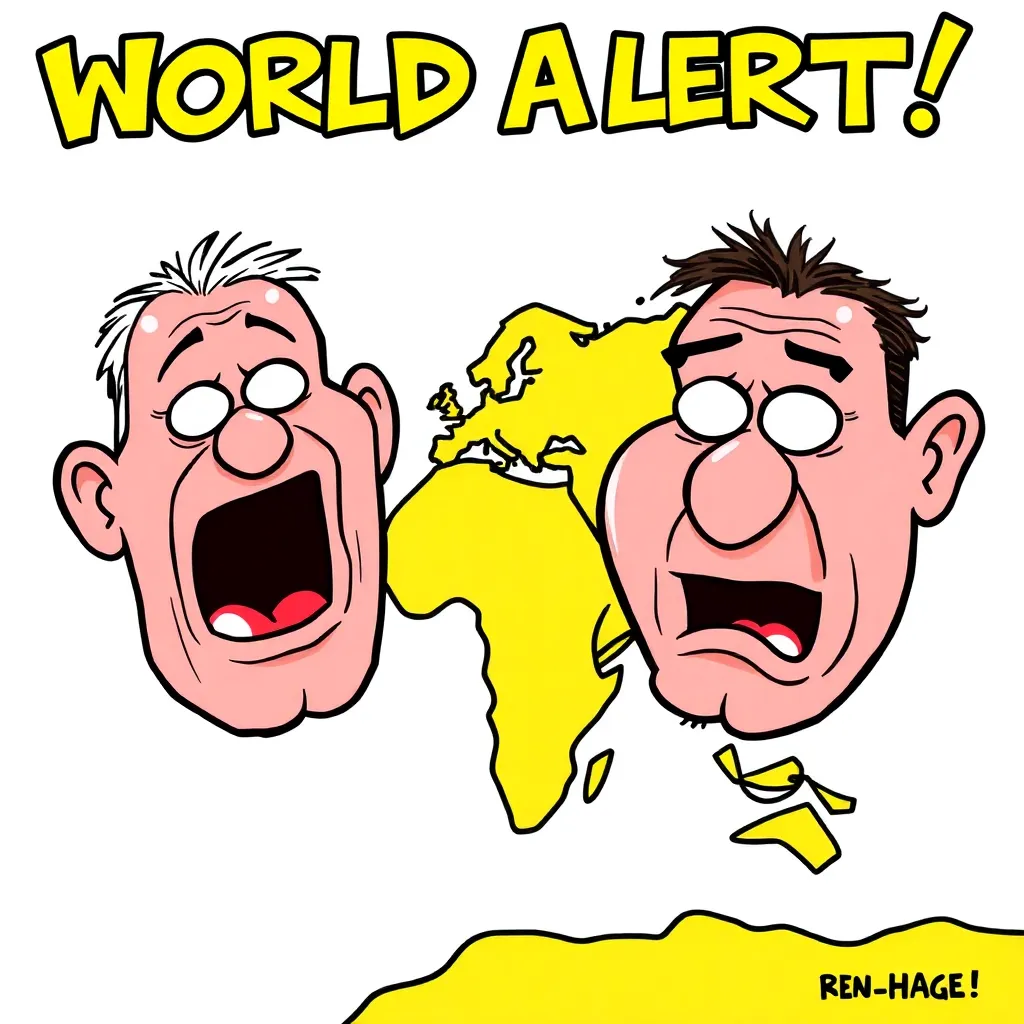
GENEVA — In what experts are calling a 'globally significant but personally manageable' development, the International Geophysical Consortium issued a formal public safety alert Wednesday confirming that France has moved approximately three centimeters to the northeast since last Tuesday, and that this movement, while technically ongoing, is 'not expected to accelerate in a way that would require anyone to run.
The alert, which was broadcast across seventeen countries and translated into four languages, urged civilians to refrain from panic, update any printed maps 'when it is convenient and not in the middle of something,' and avoid leaning on France-adjacent objects until structural assessments can be completed.
'What we are seeing is a shift,' said Dr. Helmut Granger, Senior Director of Continental Placement at the Consortium, speaking at a press conference during which he gestured repeatedly at a laminated map of Europe. 'France was here. France is now, technically, here. The distance between those two locations is small, but it is real, and we feel the public deserves to know.'
Dr. Granger declined to speculate on where France might be by Friday, calling the question 'geologically premature' and 'the kind of thing that sounds simple but really isn't.'
French government spokesperson Élise Montclair confirmed in a brief statement that the country was 'aware of its new position' and described the displacement as 'not inconsistent with France's historical character of being somewhat unpredictable.' She added that the Eiffel Tower remains 'structurally vertical' and that Paris, while technically farther northeast than it was eight days ago, 'continues to function as Paris in all meaningful respects.'
Residents near the Franco-Belgian border reported mild confusion Tuesday evening when several road signs appeared to be pointing in directions that 'felt slightly off.' Local official Bernard Lecomte confirmed the signs had not moved, adding that 'the road they are pointing to has also not moved,' and describing the overall situation as 'a matter of perception adjusting to reality at a speed that varies by individual.'
Not everyone is taking the news calmly. Gerald Hoffsteader, a retired cartographer from Stuttgart who monitors European borders as a hobby, said he noticed the shift on Monday and attempted to alert authorities for nearly eighteen hours before anyone returned his calls.
'I kept telling them France had moved,' said Hoffsteader, 54, who maintains forty-seven personal maps of the continent in a climate-controlled spare bedroom. 'They kept saying France was where it had always been. And I said, yes, but slightly less so.'
The Consortium has urged citizens to continue using France as they normally would, noting that all French roads, cities, bodies of water, and cultural institutions remain 'internally consistent with one another' and that the shift, while internationally documented, 'does not require anyone to change their plans unless their plans were extremely specific about France's exact coordinates.'
A follow-up assessment is scheduled for next Thursday, at which point officials say they will confirm whether France has continued moving, stopped moving, or 'arrived somewhere and settled,' which Dr. Granger described as 'the preferred outcome from a planning standpoint.'
Residents are advised to stay informed, stay calm, and if they are currently in France, to 'remain there until further notice, as departing may be more complicated than it appears on existing maps.'